
Officer Garrett Rolfe of Atlanta, who killed Rayshard Brooks is back on duty!

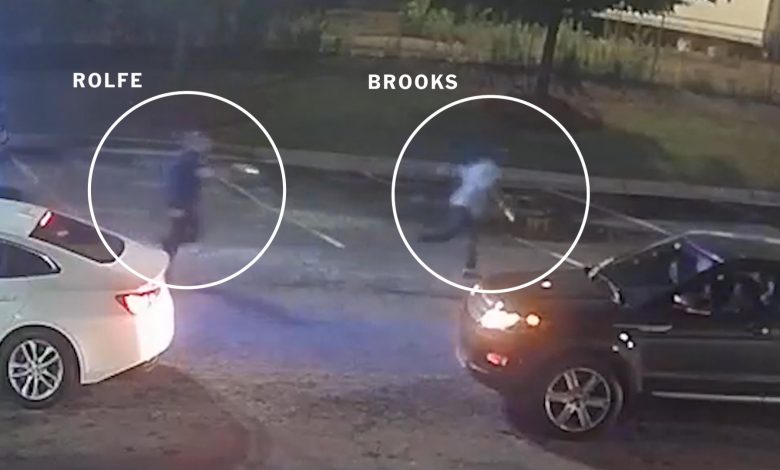
“Garrett Rolfe, Officer Fired In Rayshard Brooks Killing, Reinstated But Put On Leave”
An Atlanta oversight board has requested the restoration of Garrett Rolfe, the terminated cop accused of homicide in the passing of Rayshard Brooks, in view of details about excusal techniques under the Atlanta city code.
Rolfe will stay on regulatory leave until his criminal allegations are settled, the Atlanta Police Department said in an articulation to NPR.
The division documented desk work to excuse Rolfe the day after he gave Brooks, a 27-year-old Black man, in the parking area of a Wendy’s on June 12. Rolfe has since been accused of homicide, however his criminal case has been impeded by procedural deferrals.
“We are extremely satisfied at this activity and think of it as the initial phase in the complete vindication of Officer Garrett Rolfe,” Lance LoRusso, a lawyer shielding Rolfe, said in an explanation.
The request to restore him, made by the city’s Civil Service Board, depends on the finding that Atlanta police didn’t follow city code when it excused him. The load up discovered the division made a few mistakes on the excusal administrative work and didn’t give Rolfe sufficient chance to react.
The board explicitly didn’t make a judgment about whether Rolfe’s lead was criminal.
“Note that the CSB didn’t make an assurance with regards to whether official Rolfe disregarded Atlanta Police Department strategies. Considering the CSB’s decisions, APD will direct an appraisal to decide whether extra analytical activities are required,” division representative Anthony Grant told NPR.
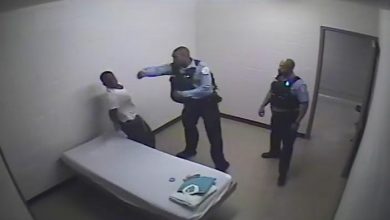
The evening of June 12, Rolfe and another official were called to the Wendy’s since Brooks had nodded off in his vehicle in the drive-through path, as per specialists. The officials showed up and addressed Brooks, and directed field collectedness tests for around 30 minutes, police body camera film shows. They at that point moved to cuff him, saying he’d had a lot to drink to be driving.
Film caught by police body cameras, Wendy’s surveillance cameras and onlookers showed Brooks opposed capture however was fleeing from the officials when he was shot. In the fight, he got an official’s Taser, at that point fled. Rolfe pursued him with his own Taser drawn. As yet running, Brooks attempted to fire the Taser back toward Rolfe. Rolfe at that point drew his handgun and discharged three shots, two of them striking Brooks.
The officials, including Rolfe, didn’t quickly give clinical help. Streams passed on not long after at a clinic.
Rolfe’s excusal was reported that end of the week.
His terminating came at a tumultuous time for the Atlanta Police Department. Under about fourteen days sooner, two different officials were terminated for utilizing their Tasers on two Black understudies during a traffic stop. (Those officials have additionally been reestablished.) The boss, Erika Shields, surrendered June 13, that very day the office recorded administrative work to fire Rolfe.
During a board hearing a month ago about whether Rolfe’s terminating ought to be switched, witness declaration and proof showed a blunder ridden, surged excusal.
Atlanta city code necessitates that the subject of disciplinary activity have a chance to react before the activity — for this situation Rolfe’s excusal — produces results. That reaction period can be abbreviated on account of crisis.
In any case, the board controlled the city didn’t give Rolfe that opportunity to protect himself, rather conveying the notification of his excusal at a gathering neither he nor police bosses could join in.
Furthermore, authorities committed a few errors on the disciplinary administrative work, including checking both “yes” and “no” containers on one structure under the segment demonstrating whether the excusal was an “crisis activity.”
“This was extremely hurried. Time was of the embodiment. At times botches happen when you surge,” Sgt. William Dean, an examiner with the division’s inner undertakings unit, affirmed at the conference.
The conference didn’t address whether any of Rolfe’s activities that evening were criminal. Rolfe, disclosing his first assertion since slaughtering Brooks, wouldn’t address any inquiries identified with June 12, refering to the Fifth Amendment.
Two observers from the Atlanta Police Department, Dean and Assistant Chief Todd Coyt, affirmed that they trusted Rolfe and his accomplice had acted suitably during the experience with Brooks.
The states of Rolfe’s bond prohibit him from having guns and keep him from having contact with any of the division’s officials besides in the event of crises, as indicated by court archives.
Rolfe will get back pay, as indicated by an Atlanta city law. It was not quickly evident whether his regulatory leave would be paid or neglected.
“We are working with the city and have not gotten particulars on his status upon his restoration,” LoRusso said in an email to NPR.
In light of the board’s structure to restore Rolfe, Mayor Keisha Lance Bottoms guarded the underlying choice to fire Rolfe.
“Given the unpredictable condition of our city and country the previous summer, the choice to end this official, after he lethally shot Mr. Streams toward the back, was the correct thing to do,” she said in an articulation.
The restoration baffles activists like Britt Jones-Chukura. On Wednesday evening, she joined many activists accumulated on the means of Atlanta City Hall to fight the choice.
“For what reason do we continue to do this? For what reason do we continue to affront the tradition of the home of the social liberties development? Nothing more will be tolerated,” she said.