Methods Police are using to stop videoing bystanders

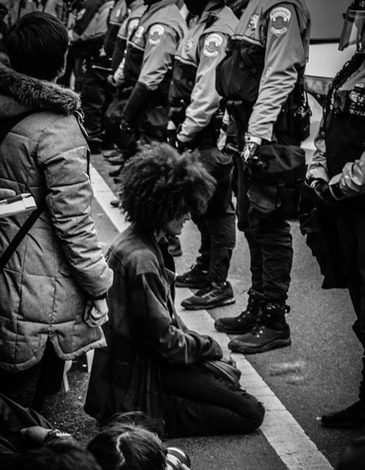
Kian Kelley-Chung was wearing a dark T-shirt with the logo of his narrative and craftsmanship aggregate on the day the previous summer when he ended up shooting the Washington, DC, police during a dissent. It was August 13, 2020, and Kelley-Chung had been recording Black Lives Matter shows in the city two or three months. At this one, in the Adams Morgan area, he saw an official push someone to the ground—and as he surged over to film it, he says, he was pushed by an official himself. Rapidly he was caught, or “kettled,” with a little horde of individuals.
Kelley-Chung says that is the point at which an official conveying zip ties said he needed to capture somebody, prior to gazing straight toward him, snatching him, and hauling him out of the pot. Kelley-Chung—whose photographs had been distributed in the Washington Post—was conveying different bits of video gear, alongside his mobile phone.
“I hollered out, ‘They are capturing a writer!'” he says. Others in the group repeated his call, however he was transported to numerous regions and went through hours in a little cell with a maskless individual. He was delivered the following day without any charges, as were a large portion of the 40 others who were captured at a similar dissent, yet the police kept his gear and telephone.
That hardware may in any case be in police authority, he says, on the off chance that he hadn’t got lawful help. Following 10 weeks, with the assistance of the National Press Photographers Association and First Look Media’s Press Freedom Defense Fund, attorneys at long last got Kelley-Chung’s hardware back. Whenever that was accomplished, they sued the police for social equality infringement, with a protest that blamed the District, the Metropolitan Police, and its acting boss, just as numerous officials and nearby authorities, of abusing his protection and his privileges under the First and Fourth Amendments. They settled the claim in April: Kelley-Chung was granted a “considerable” whole.
Shooting the police has become a well known device of responsibility that is all the while fundamental and risky. In view of a video shot by an onlooker, we realize that Minneapolis Police official Derek Chauvin killed George Floyd, a Black man in his 40s, by stooping on his neck for almost nine minutes. Without the video that 17-year-old Darnella Frazier took, it’s entirely conceivable Chauvin would not have been indicted: when police previously portrayed Floyd’s demise in a press proclamation, they guaranteed that it had happened “after [a] clinical episode during police cooperation.”
Individuals film the police since they realize that officials hurt or slaughter individuals and lie about it; since it is for the most part inside their First Amendment rights to do as such; and in light of the fact that recording an experience with the cops may cause them to feel somewhat more secure. Police offices can’t just be trusted, and autonomous video of conceivable offense or viciousness can in some cases be the lone thing with the ability to make a bogus police account offer path to reality.
Yet, as Kelley-Chung discovered, cops aren’t just allowing this to occur. Despite the fact that shooting the police is by and large legitimate in the event that it doesn’t meddle with their exercises, and despite the fact that officials are progressively conveying cameras themselves, they have fostered a scope of strategies to keep their activities from being recorded.
What’s more, in the event that you need to know how they do it, you can ask a cop watcher.
“It notifies the official”
Hamid Khan, a coordinator with the Stop LAPD Spying Coalition, is one of a partner of individuals who film the police in Los Angeles. Cop watchers do precisely what the term recommends: notice and record police tackling their responsibilities. A few associations train individuals in LA to securely film police and other city authorities at work, regardless of whether it’s to record how fights are checked or to catch bad behavior.
That preparation, Khan says, likewise incorporates systems for dealing with the strategies that police will use to prevent themselves from being shot. These incorporate “bodying up,” or genuinely hindering a camera with their bodies, and “undermining, scaring, badgering individuals who are utilizing cameras.”
However long police are being recorded openly, doing their obligations, “we accept, and numerous government courts have said, that the option to film the police is ensured by the First Amendment,” says Emerson Sykes, a staff lawyer with the ACLU’s Speech, Privacy, and Technology Project. That incorporates various choices from US circuit courts, yet not the Supreme Court, which still can’t seem to say something. As of late, the tenth Circuit Court split from this agreement, giving a choice in late March that declined to assert the First Amendment option to record police.
Numerous states, including California, do specify that recording the police can be illicit when an official confirms that an observer with a camera is meddling with an examination. And keeping in mind that the option to take pictures and record video of cops working in broad daylight is pretty uncontroversially settled, sound accounts—including those made as a feature of a video—can be a trickier subject.
The Electronic Frontier Foundation’s manual for recording police takes note of that in places with one-party-assent wiretap laws—38 US states and the District of Columbia—you can unreservedly record sound. In the 12 states with two-party-assent laws, an obviously apparent chronicle gadget “notifies the official and hence their assent may be inferred,” however police may contend in an unexpected way.
Authentic contentions, ill-conceived circumstances
There are heaps of reasons why a cop might not have any desire to be on camera. Some are more justifiable than others, says Adam Scott Wandt, an associate educator of public arrangement at John Jay College of Criminal Justice. In a touchy experience, similar to an abusive behavior at home call, an official or casualty probably won’t need personalities uncovered by an onlooker sharing film via web-based media. Secret officials, he says, are additionally impervious to being shot and having their personalities become openly available report.
These may be real concerns, however cop watchers say they are additionally contentions that they’ve seen cops use in ill-conceived circumstances.
Wandt, who was an official in New York’s Long Beach for a very long time before phones with cameras were as normal, says he has encountered this now that he’s a teacher and photographic artist. “I have been asked on one event by a cop not to photo him,” he says. “He wasn’t busy. He was remaining on the metro. Also, the cop said to me, ‘Never take photos of the police.’ Obviously the law isn’t his ally.”
Various cop watchers say they’ve over and again seen cops refer to obstruction in totally unjustifiable circumstances, frequently as a certain danger. They are, says Khan, “practically one might say, attempting to make conditions … where they can show that, you know, individuals are meddling with their work, which isn’t accurate.”
“I’ve been undermined with it,” says Jed Parriott of LA Street Watch, which advocates for the privileges of individuals encountering vagrancy. He’s likewise had cops reveal to him that the unhoused individuals he’s recording don’t need him there and that his work is abusing them, when he knows beyond all doubt that his quality at this particular second is gladly received and needed.
Road Watch invests energy in settlements around there, archiving the manner in which police and city authorities treat their occupants and looking for “clears,” which are basically mass expulsions. The association was supporting the settlement at Echo Park Lake until the city shut the recreation center for fixes and kicked out all of several hundred individuals who lived there. In Echo Park, Parriott was recording while park officers contended with, and afterward handled, a youthful Black occupant.
“I was extremely stressed,” he says. “A strained second. In any case, as this was going on, the officers stuck him to the ground and I was in that general area, five feet away, shooting everything. Individuals shouting surrounding me, hollering. A disinfection specialist put his hand before my camera.” Then, he says, a LAPD official impeded his view with his body. “You simply change and move,” Parriott says.
LAPD officials are prepared to deal with onlooker accounts as a First Amendment right, says Lieutenant Raul Jovel, a representative for the office, and that preparation is repeated consistently. At the point when officials conflict with that preparation, Jovel says, the office’s reaction differs from a token of the public’s entitlement to film them to a work force examination and disciplinary activity.
Officials can be especially impervious to permitting somebody with the option to film to keep on doing as such, he says, when they accept the individual with a camera is likewise hollering at the police. “Now and again as an official, you’re similar to, ‘Stand by a moment. I reserve the option to represent myself,” Jovel says. “What we need to remind officials is,: ‘I would rather not reveal to you this, however you are a community worker, and this is essential for the work.'”
The Los Angeles Park Ranger’s manual remembers a segment for accounts made by individuals from people in general, where it perceives this go about as a right, exhorting that officers “won’t disallow or purposefully meddle with such legitimate chronicles.”
Sykes noticed another circumstance that can be extreme for those account the police to explore: when an official looks to see a photograph or requests that you erase it, with the understood or unequivocal idea that you’ll go free on the off chance that you agree. It is, Sykes says, unlawful for an official. A warrant is by and large needed to see your photographs or accept them as proof. “Regardless of whether they have a warrant from an adjudicator, and regardless of whether you’re captured, they actually don’t reserve the option to erase the photographs,” he adds.
Not every person who may catch police unfortunate behavior will have been prepared ahead of time. Parriot and other activists regularly distribute flyers to inform people of their right to film the police, because police will tell people they don’t have that right when in fact they do.
Step by step instructions to remain safe
In any case, regardless of whether it’s lawful, it’s not generally protected. In August of a year ago, a dad who got out of his own vehicle to film across the road from where his child was being captured was pepper-splashed and bound. Kelley-Chung, the documentarian, says he initially encountered the feeling of several years prior when he and a companion were pulled over for a minor explanation on their way back to school. He reviews that the official hauled his companion out of the vehicle, furious that they had not completely opened the window. He needed to film the remainder of the experience yet was faced by another official when he ventured into his pocket to recover his telephone.
Notwithstanding what an individual official expects, Wandt says, many “simply don’t need things on camera in the event that things go sideways,” and they particularly don’t have any desire to be in a viral video if that occurs, That prospect is likely driving a great deal of officials to attempt to meddle misguidedly with observer accounts. Sometimes, they are preemptively attempting to cover for an associate who is inclined to viciousness. “There are cops who view themselves as fighters, who will utilize a limit measure of power when power is required,” Wandt says. “Those officials clearly don’t need their face or activities got on camera.”
Remaining more secure while recording police action requires various strategies relying upon the circumstance. Onlookers seeing police savagery in a public space should keep a distance, Kelley-Chung prompts—that way you can’t be blamed for being a member. On the off chance that you get pulled over? Get a traveler to begin shooting immediately, before the official methodologies your window (venturing into your pocket for your telephone can likewise be very perilous, especially for minorities). In the event that it’s legitimate around there, a scramble cam may be another option, Wandt recommends.
However much a cell camera offers assurance, Wandt says, it’s additionally essential to remember that “when someone takes out a camera and starts recording a capture, it totally changes the idea of the circumstance for everyone, from the casualty to the suspect to the cop.”
“There’s the law, there’s the Constitution, and afterward there’s your main thing when you’re up close and personal with the police,” says Sykes, the ACLU lawyer. Sorting out precisely the amount to stand up against a cop who is providing an unlawful request is “intense,” he says, particularly in specific conditions—for instance, at a dissent.
“There is an extraordinary kind of hazard when you’re fighting the police and the police are furnished and standing feet from you,” Sykes says.
On-the-ground experience is actually the best way to peruse whether a circumstance at a dissent is protected. However, one thing Kelley-Chung has noticed is that the presence of a camera recording an official can shield others from unfortunate behavior.
“At the point when you see individuals in a verbal debate with police, get as close as could really be expected,” he says. “That camera can be more assurance than a strategic vest.”
In any circumstance, everybody we addressed had similar admonitions: Do not meddle in police activities. Go along when police reveal to you that you need to move, however you don’t need to prevent shooting from another area, regardless of whether they guarantee you should, as long as you are recording an official in a public space completing their obligations.
Cop watchers by and large encourage others to gather recognizing data on police at the scene, and to take note of the time and area. You could want an identification number; Parriott says most officials in reality convey business cards.
A mine of deception
No single video will change how police act, and specialists contend that even huge quantities of recordings can’t change the way of life of many police offices. Actually, police have discovered approaches to utilize video, particularly body camera film, to build up and control their own story in instances of conceivable savagery or wrongdoing.
Individuals like to feel that video is just a nonpartisan instrument for catching data, says Jennifer Grygiel, an associate educator of interchanges at Syracuse University—however it’s not, and how it’s delivered, and in what setting, needs extra checking.
“They will set the story when it’s delivered, which controls the underlying public conclusion around it and assessment. They likewise push it out on their online media, and their records are actually similar to every other person’s in that they develop their crowd. So then they get individuals following them there in light of the fact that they’re quick to distribute data,” Grygiel says. Their own exploration manages how police divisions utilize web-based media to sidestep actuality checking by writers: it began after they saw how police were pushing out mugshots on neighborhood Facebook pages. “Individuals were going in there, similar to an old public square, and annoying individuals who had been captured,” Grygiel says.
As police become better at creating their own media, discovering a group of people outside of reporting, and capitalizing on responsibility estimates like body cameras, Grygiel contends, free documentation of cops working out in the open can fill in as a counter to that informing. Here and there, as was for the situation with the Floyd murder, that documentation happens immediately, and regularly in the midst of extraordinary pain, when clear cases of police brutality or wrongdoing are unfurling progressively.
In any case, the limit with respect to police and police-associated associations to spread falsehood was clear during the fights in the late spring of 2020, when police divisions over and again advanced mistaken data. A portion of that deception turned into a web sensation, supported by thoughtful media inclusion and the traditional web, never going to budge on building up the conviction that enemy of bigotry fights are only a channel for a brutal conflict on cops.
Police associations advanced a disturbing case that Shake Shack workers had “deliberately harmed” a gathering of cops in Manhattan. The story had been dissipated by the following morning: NYPD agents said the foul-tasting substance in the three officials’ milkshakes wasn’t “blanch,” as the associations guessed, and it wasn’t added to the beverages intentionally. Albeit the Police Benevolent Association and the Detectives’ Endowment Association both in the end erased their tweets making the allegation, they had a huge number of retweets, and set off an influx of unsuspecting inclusion in moderate and predominant media. Media reviews about the tweets got a huge number of offers on Facebook and kept on coursing even after the story was exposed.
What’s more, this was only one model. The previous summer, NYPD Commissioner Dermot Shea reposted a video of police eliminating containers of blocks from a South Brooklyn walkway, asserting they were crafted by “coordinated plunderers” offering dissenters materials to use for brutality, regardless of little proof that this was in reality obvious. The NYPD likewise circled a caution to officials with pictures of espresso cups loaded up with concrete, which intently take after substantial examples utilized on building locales. In Columbus, Ohio, the police tweeted out a photograph of a beautiful transport that they said was providing risky hardware to “agitators,” energizing effectively uncontrolled public gossipy tidbits about “antifa transports” diving on urban communities. Truth be told, the transport had a place with a gathering of bazaar entertainers, who said the hardware police refered to as uproar supplies included shuffling clubs and cooking wares.
So, police actually lie in spite of being observed more intently than any time in recent memory. There are many recordings of police wrongdoing at the late spring fights alone, some from the body cams acquainted in changes implied with consider them more responsible. Yet, Kelley-Chung believes there’s just such a lot of contrast any one video can make.
“I’ve seen individuals shooting officials with their cameras out at the time and afterward get handled by police,” he says. “They know they’re on camera … but then they actually keep on mishandling.”
And surprisingly after he arrived at his settlement with the DC police, there’s a part of that day he can’t quit pondering. Kelley-Chung is Black, and his recording accomplice, Andrew Jasiura, is white. They were both wearing a similar T-shirt, conveying a similar kind of camera hardware. Officials saw Jasiura as well: “They hauled him out so they could converse with him,” says Kelley-Chung.
That is when Jasiura told police that his accomplice was a writer as well. They kept on capturing him at any rate.